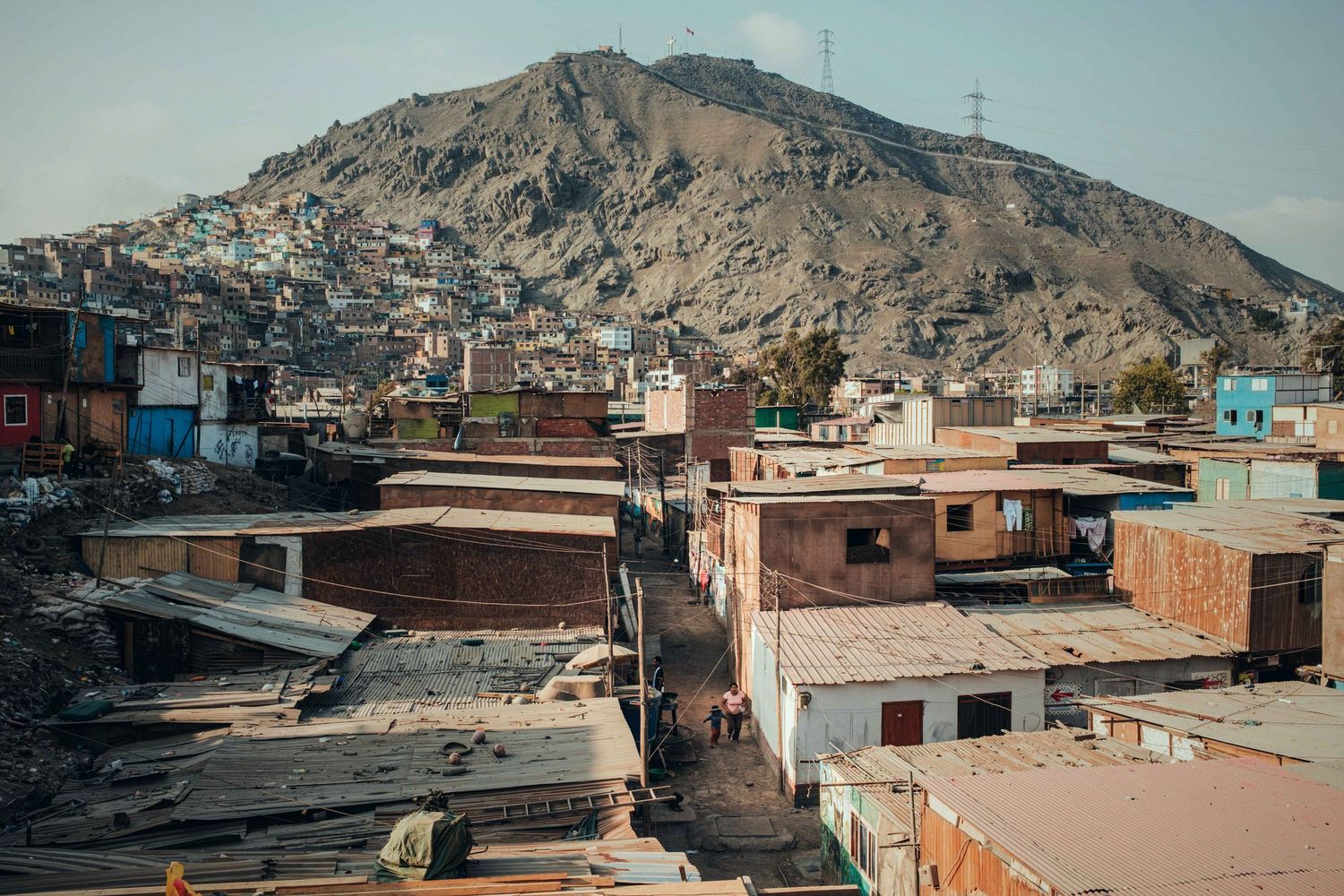
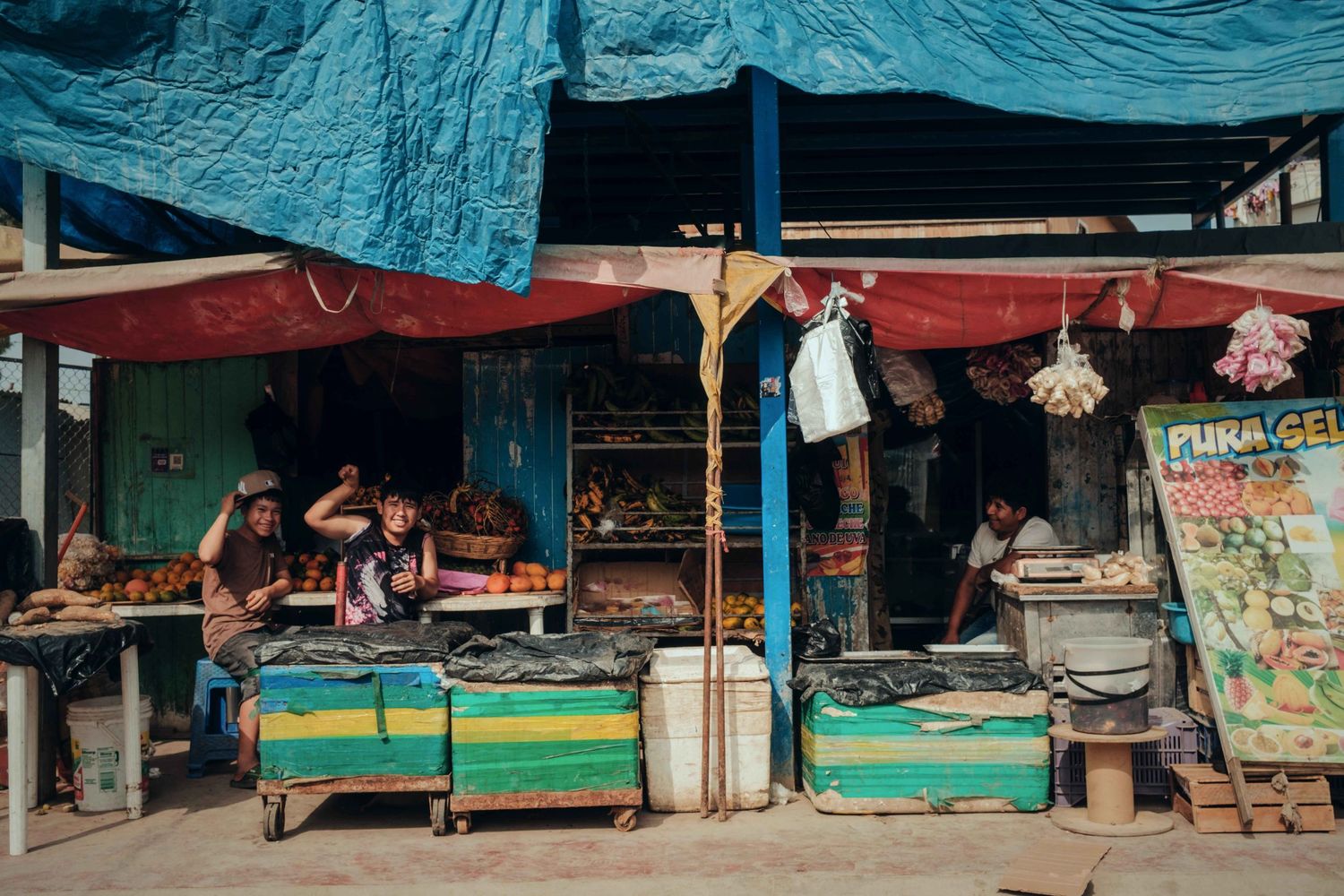
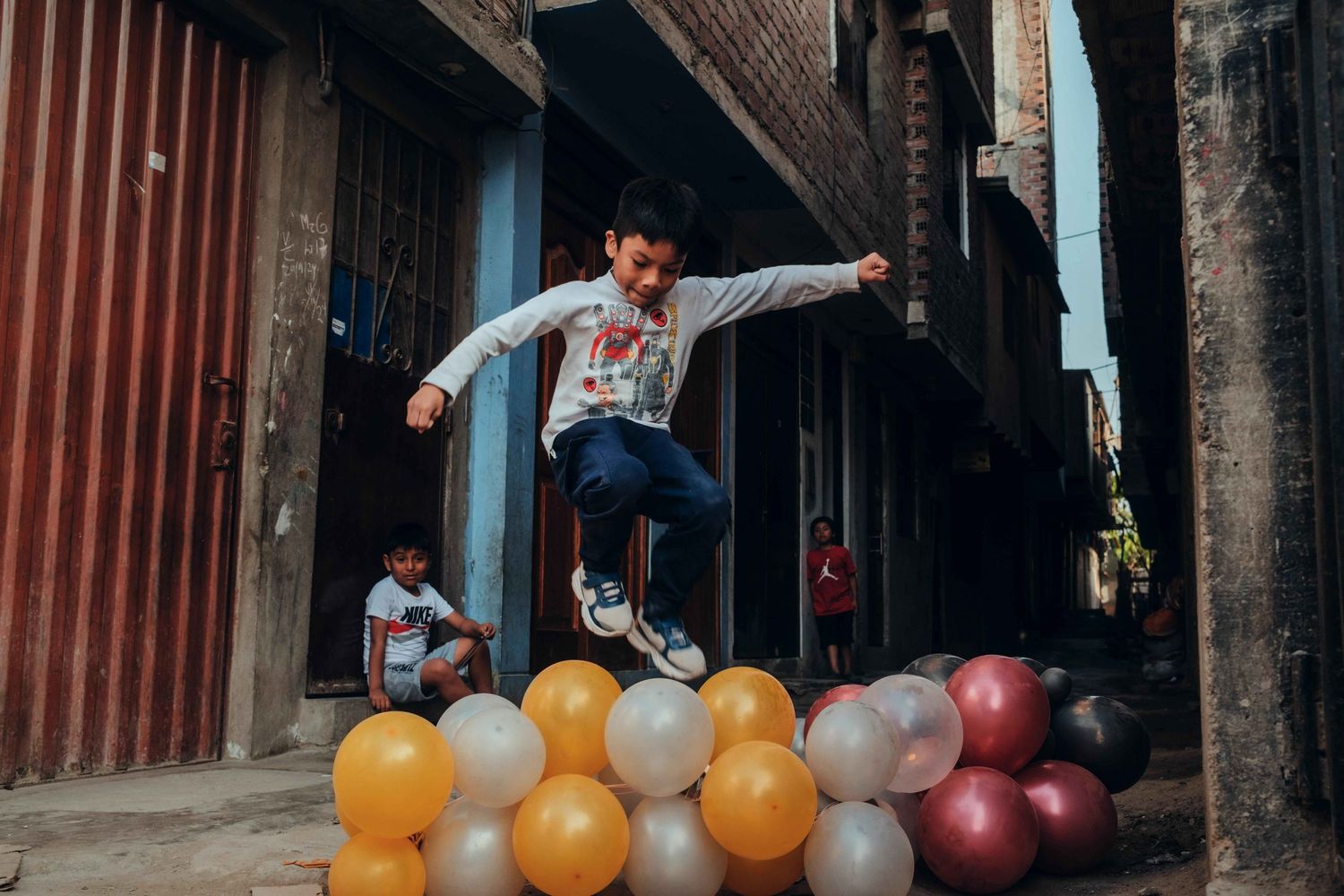
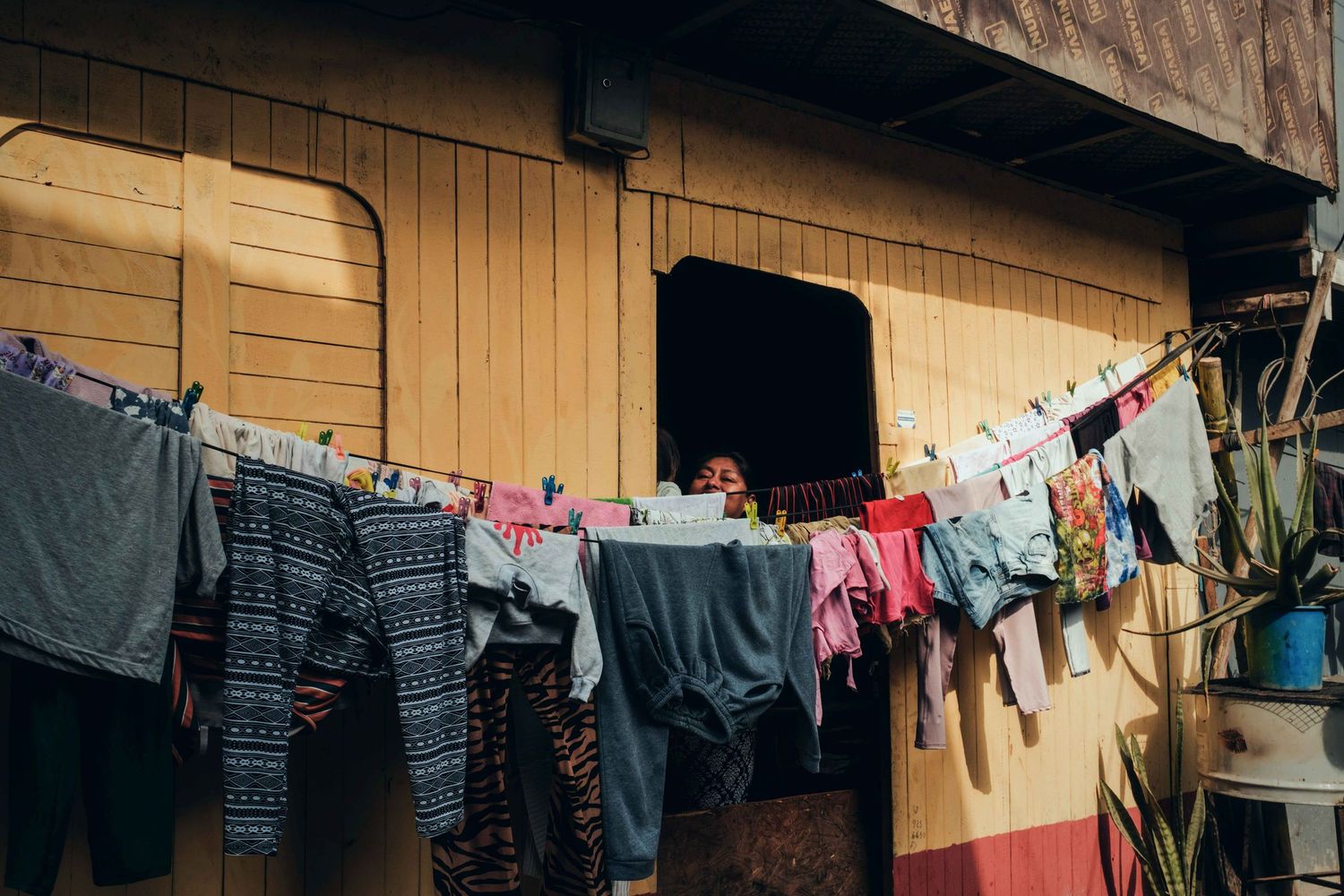
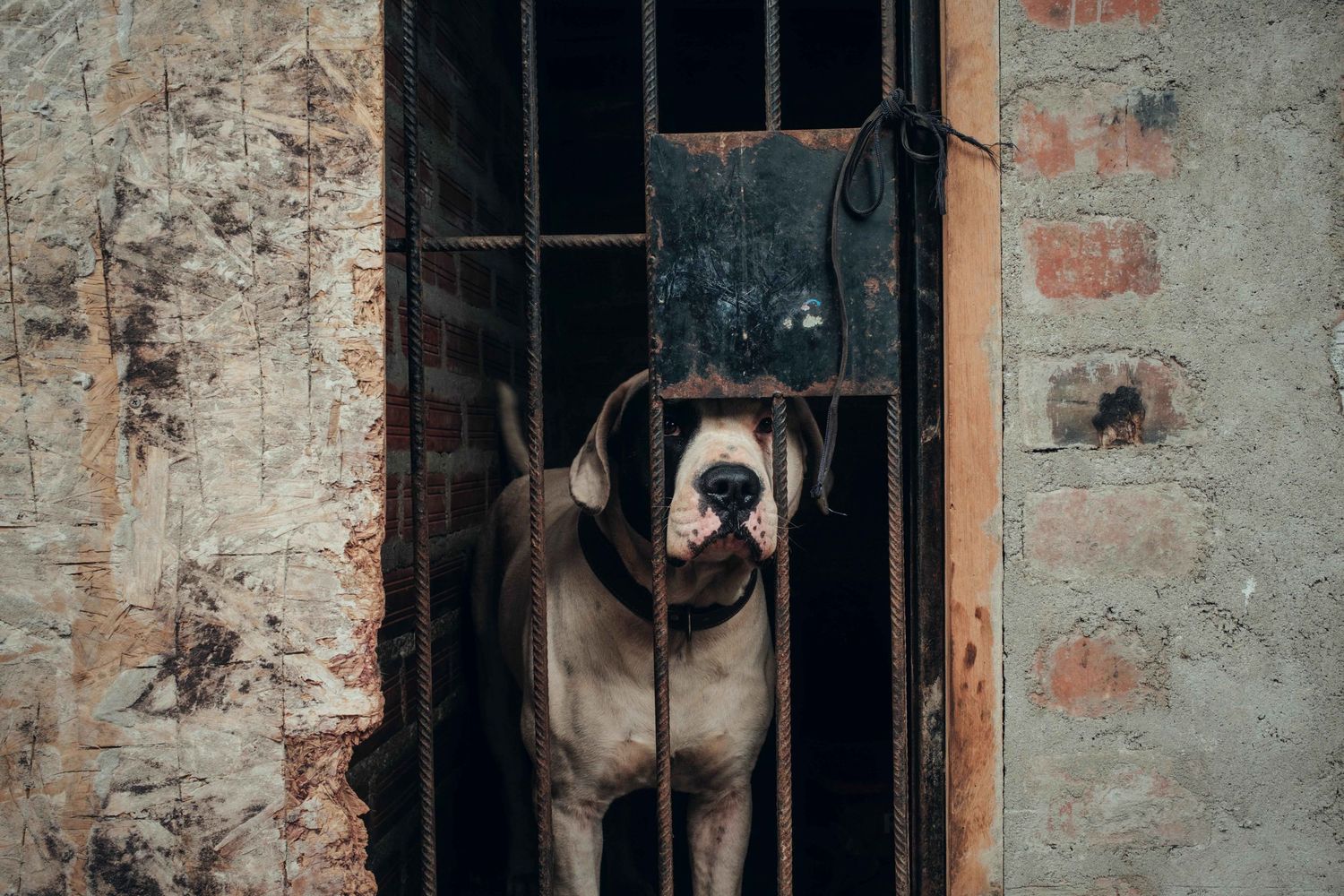
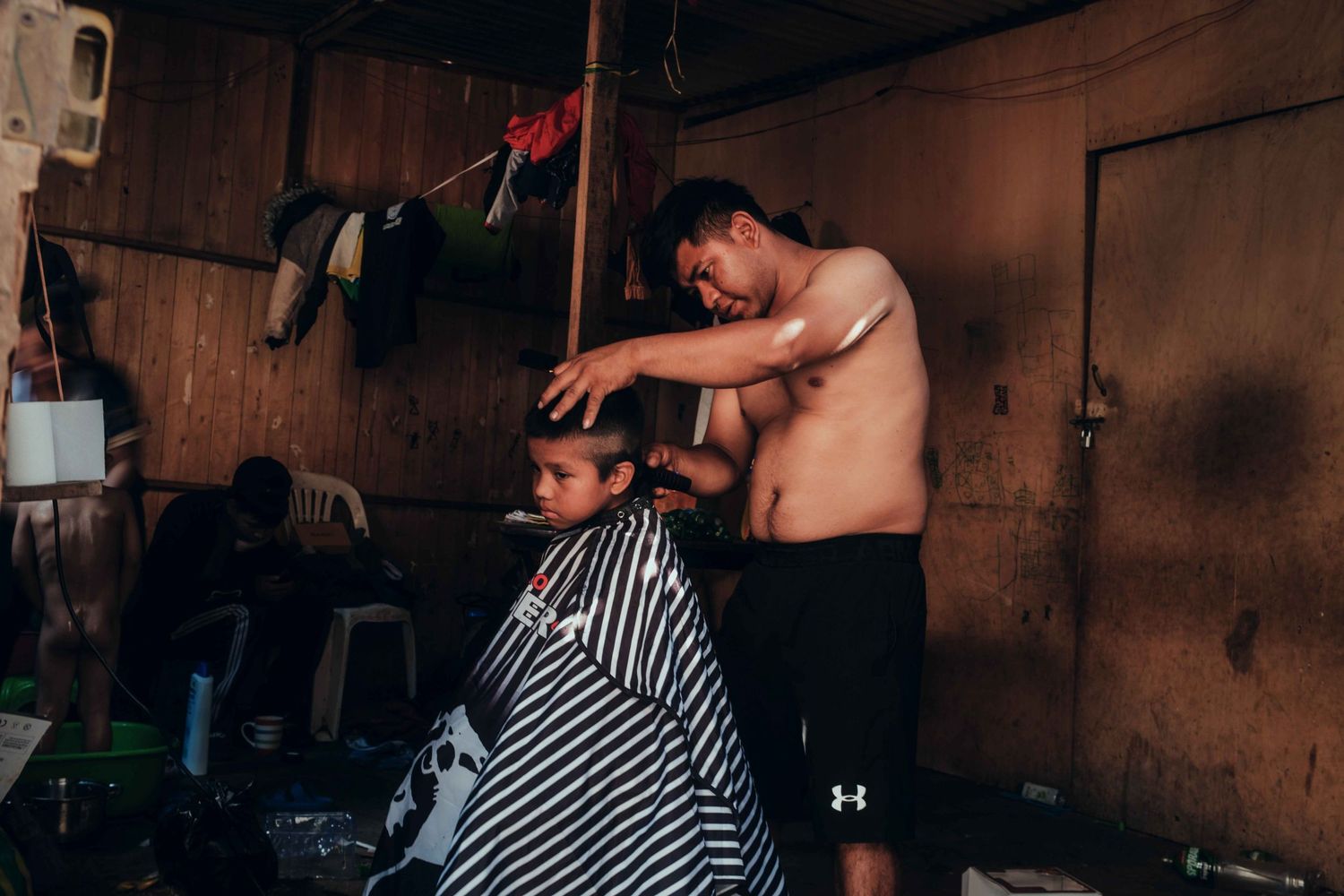
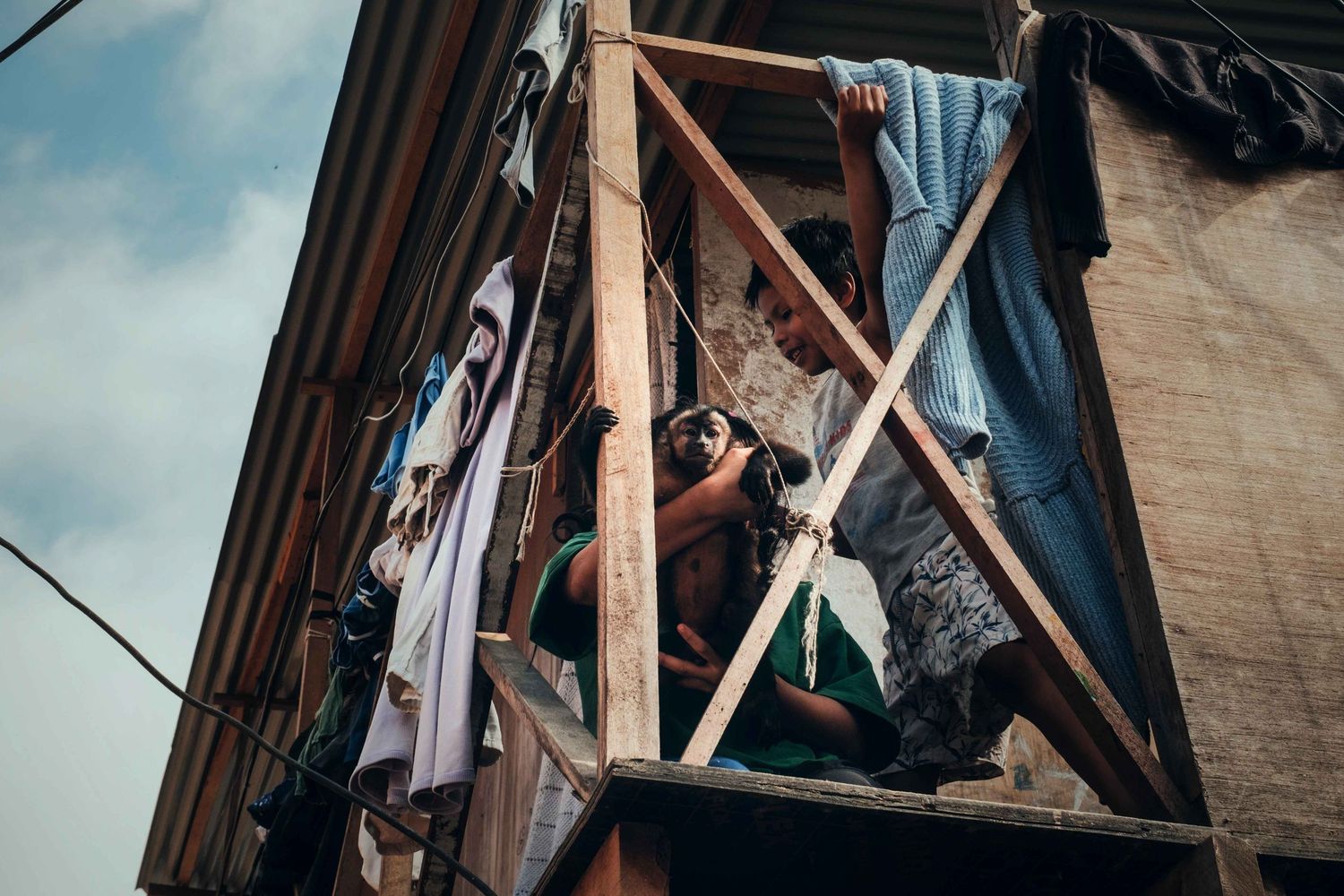
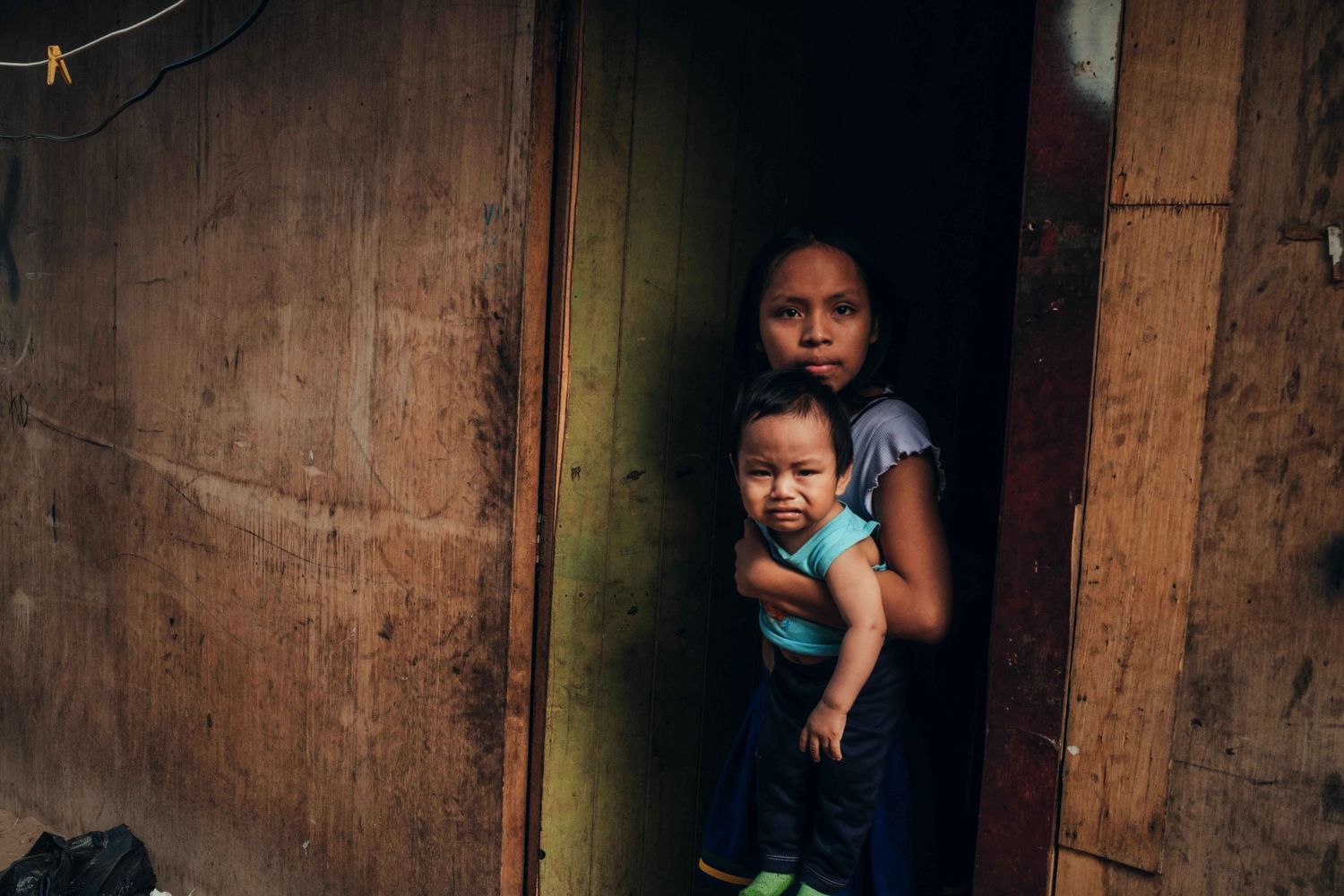
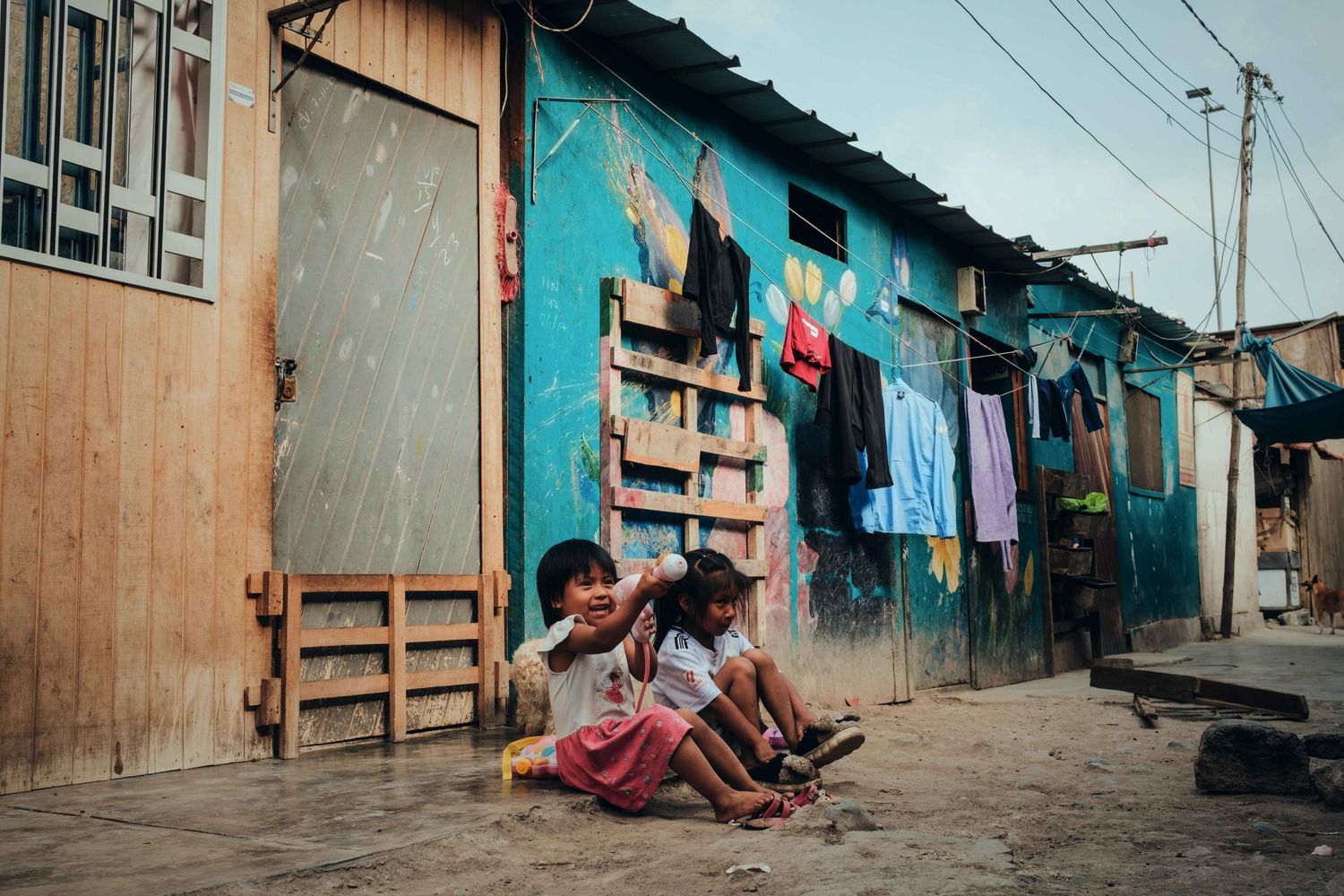
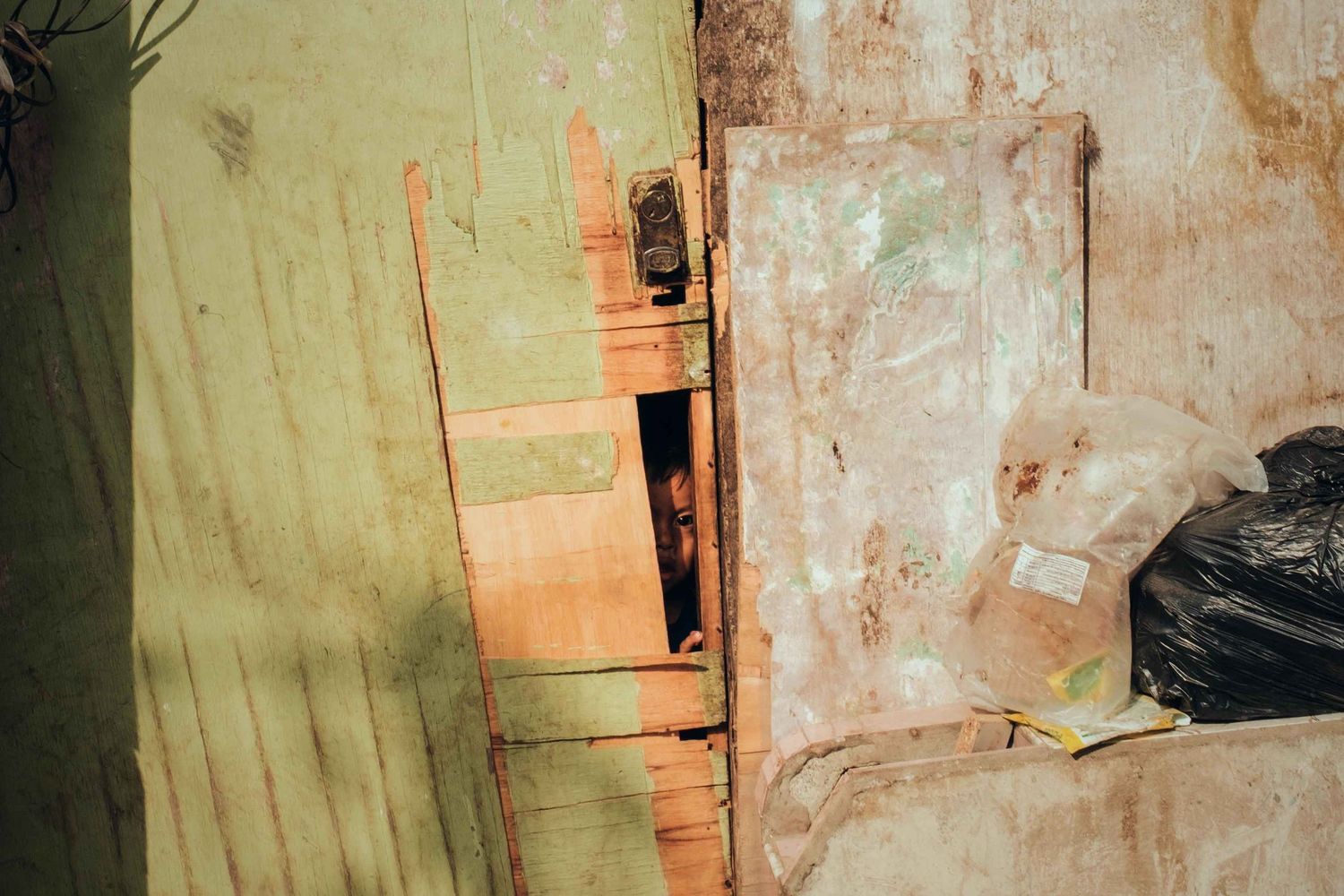
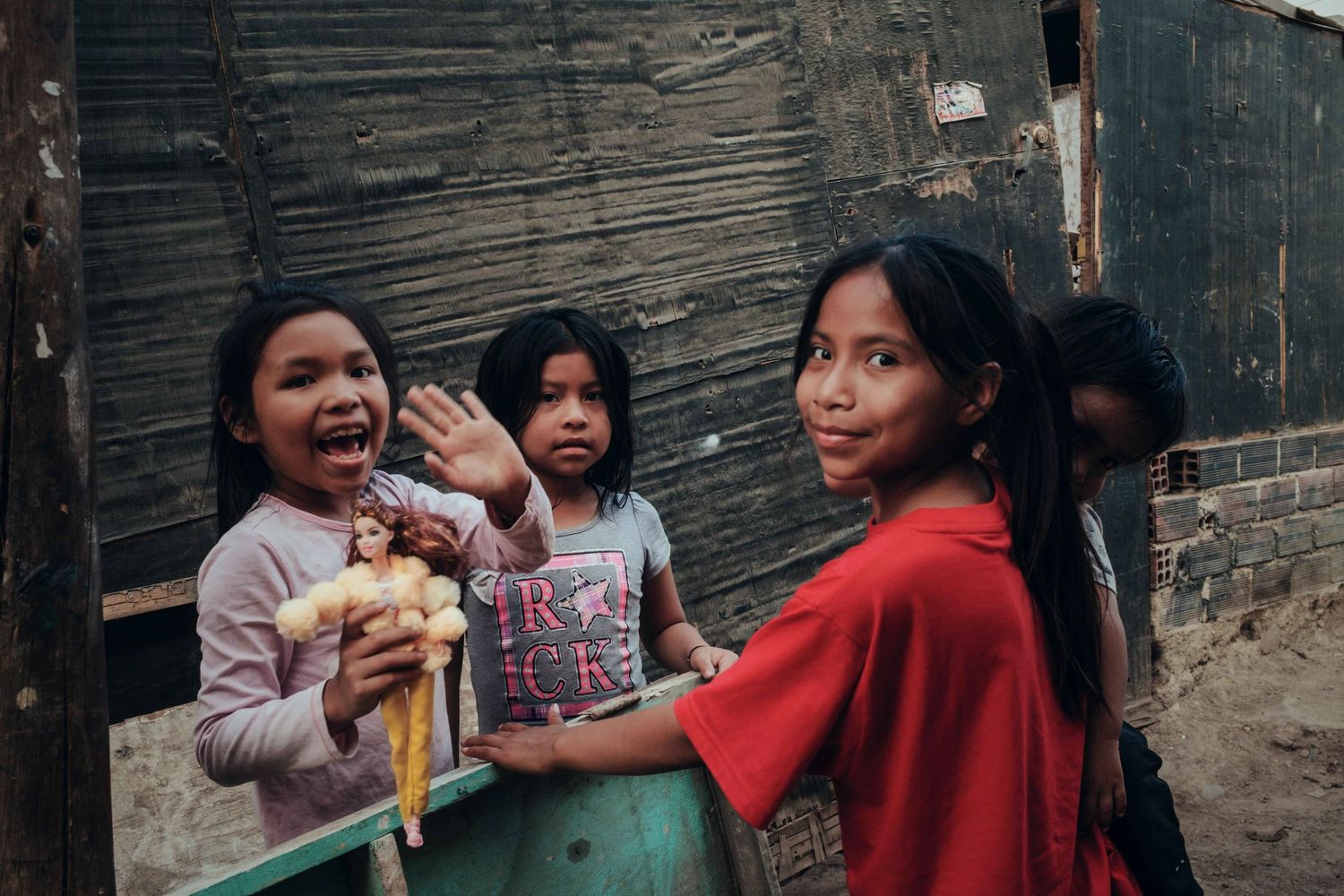
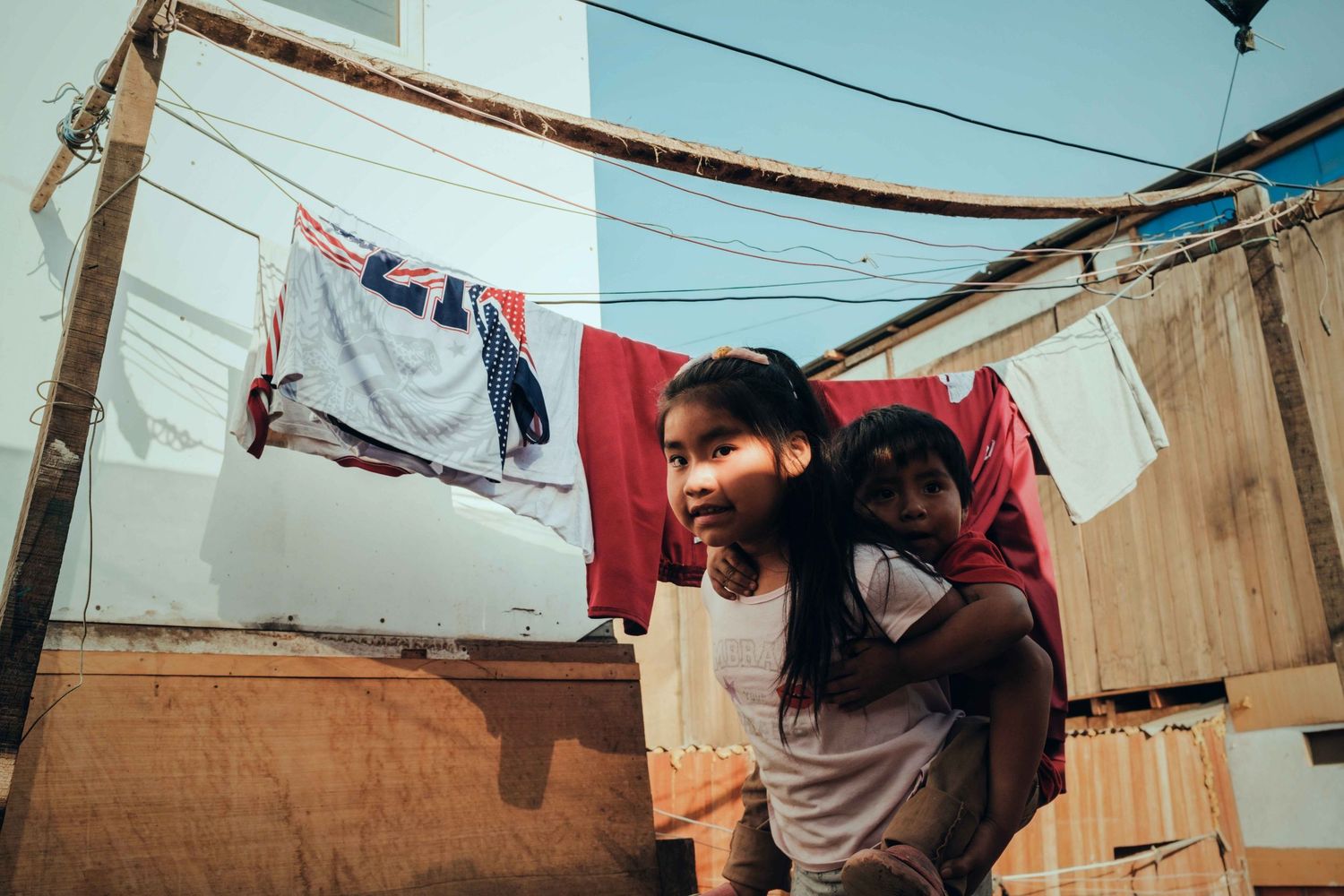
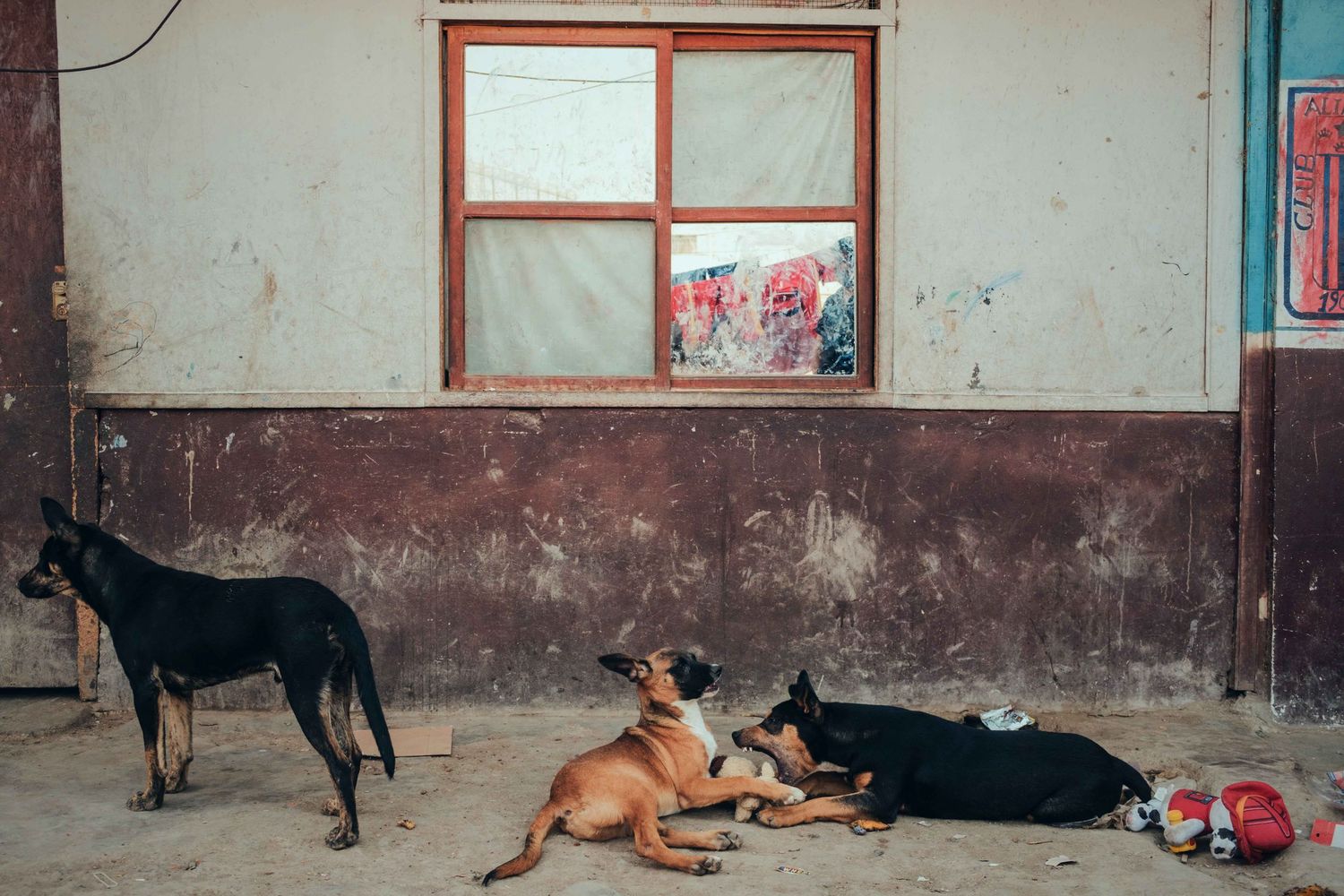
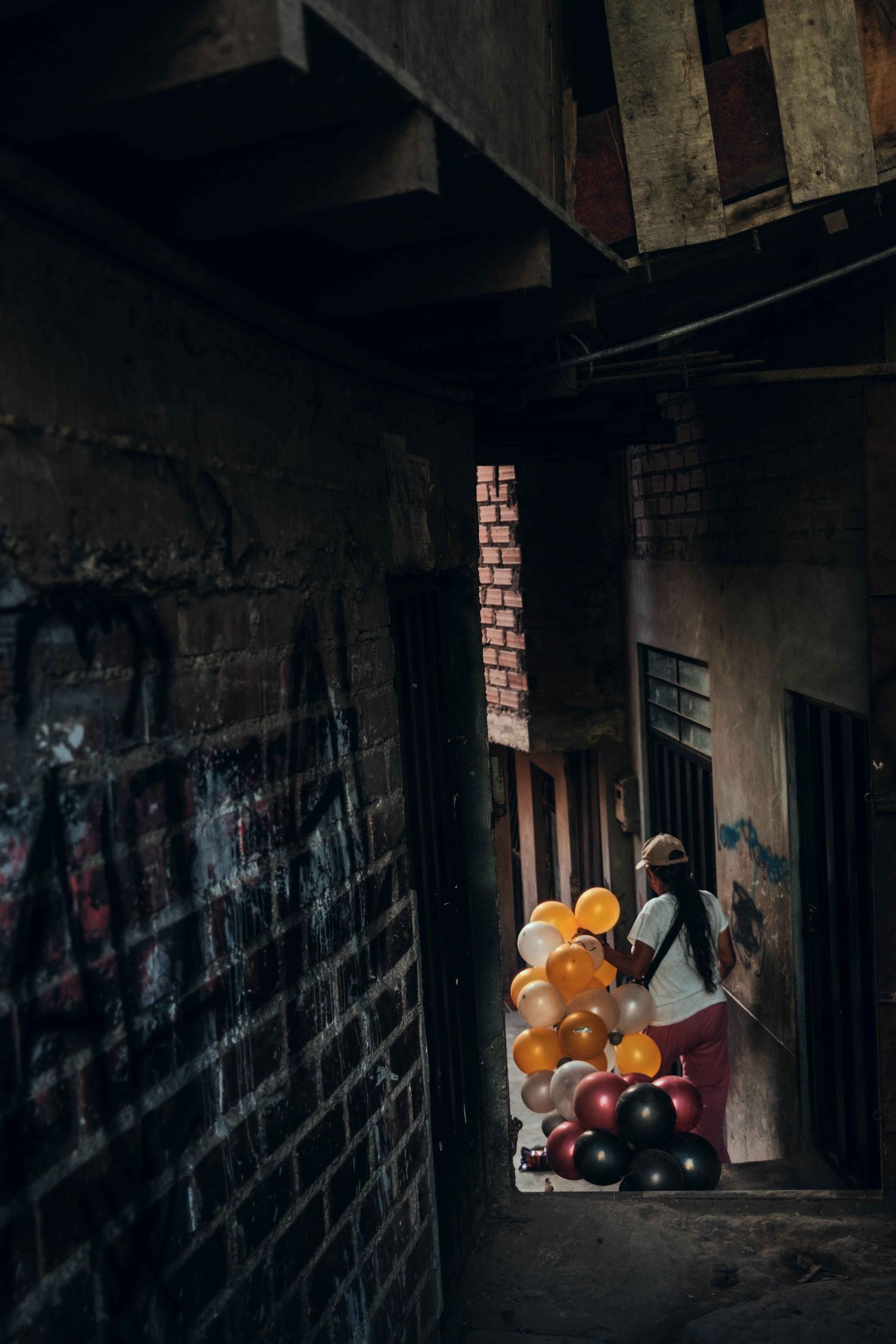
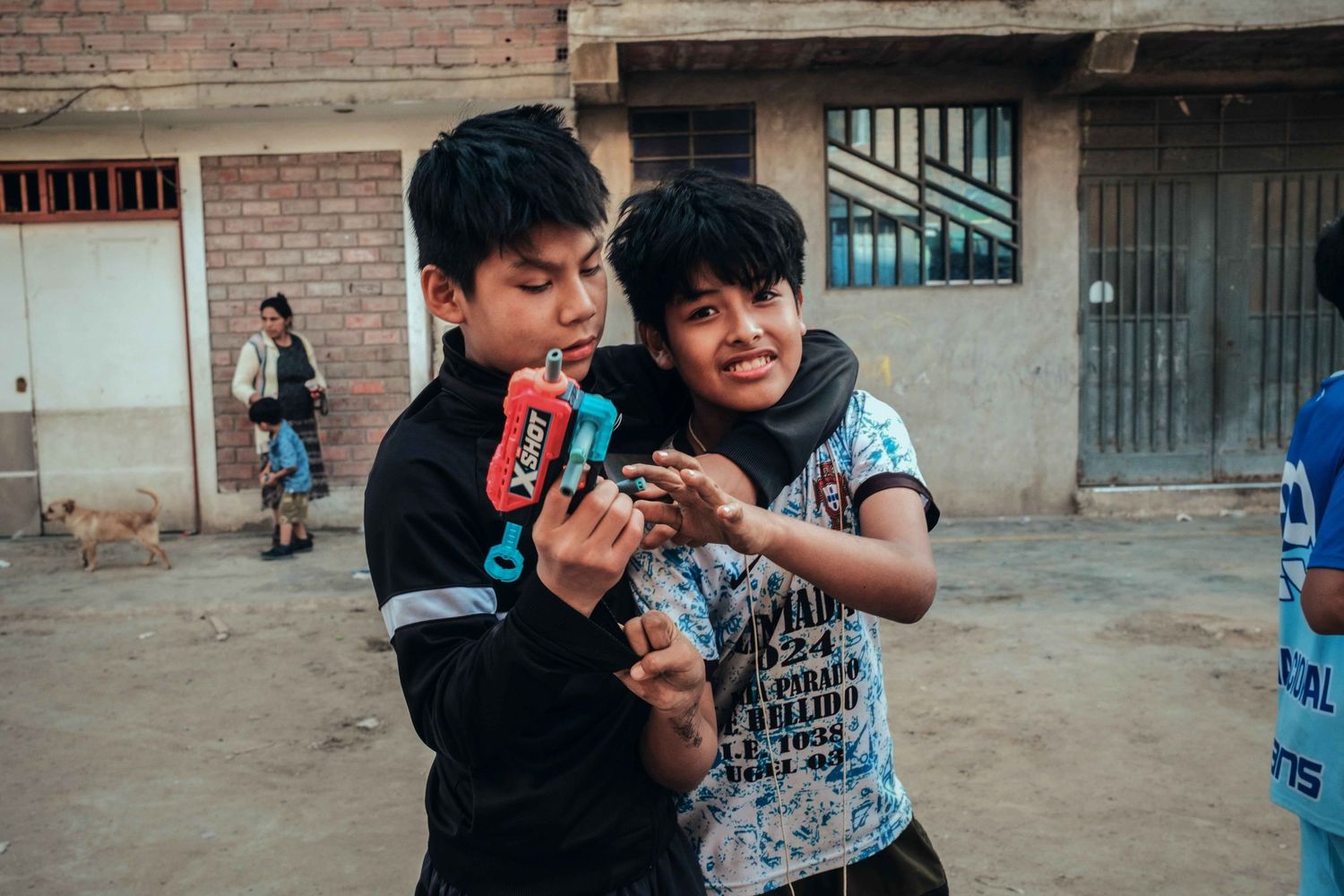
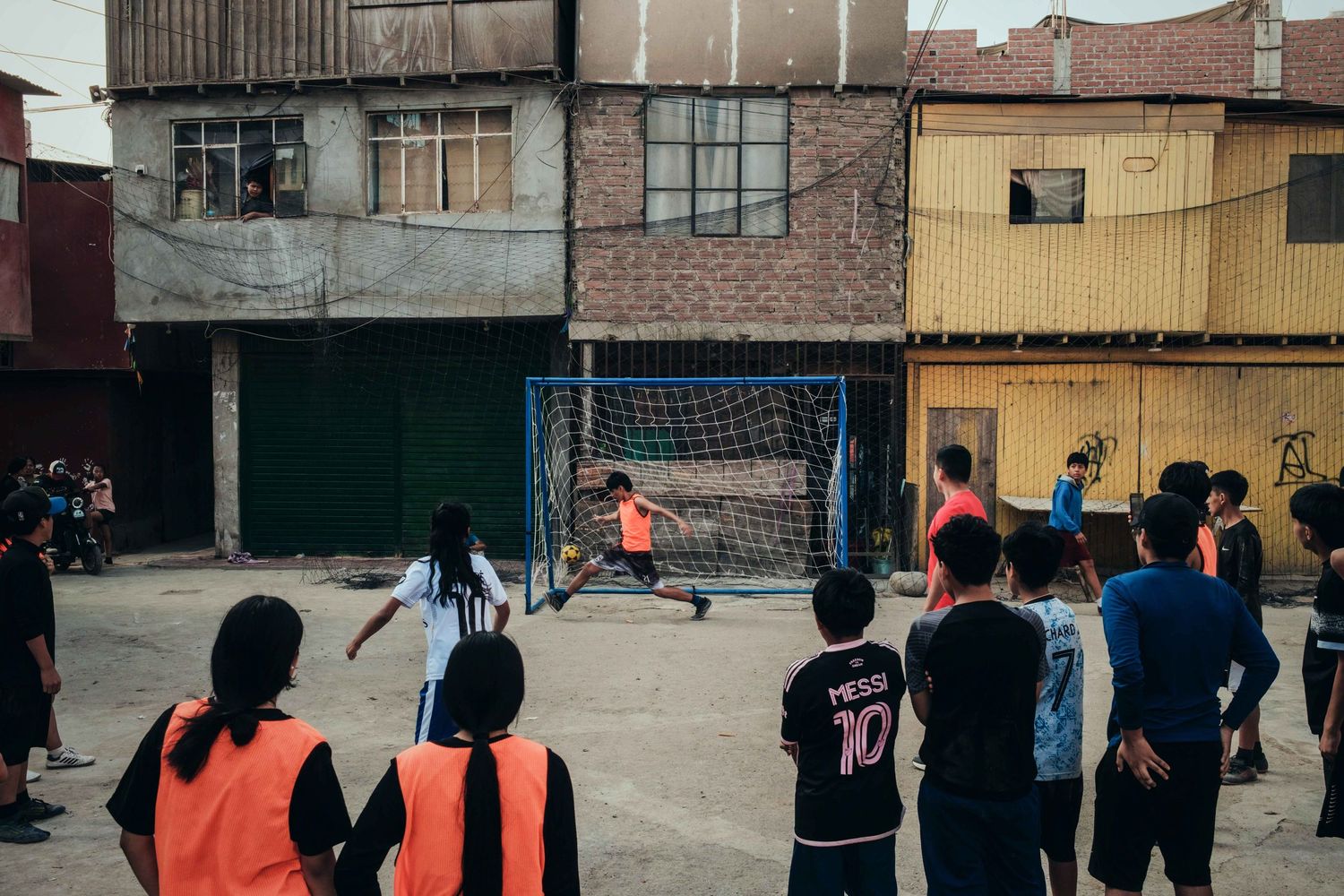
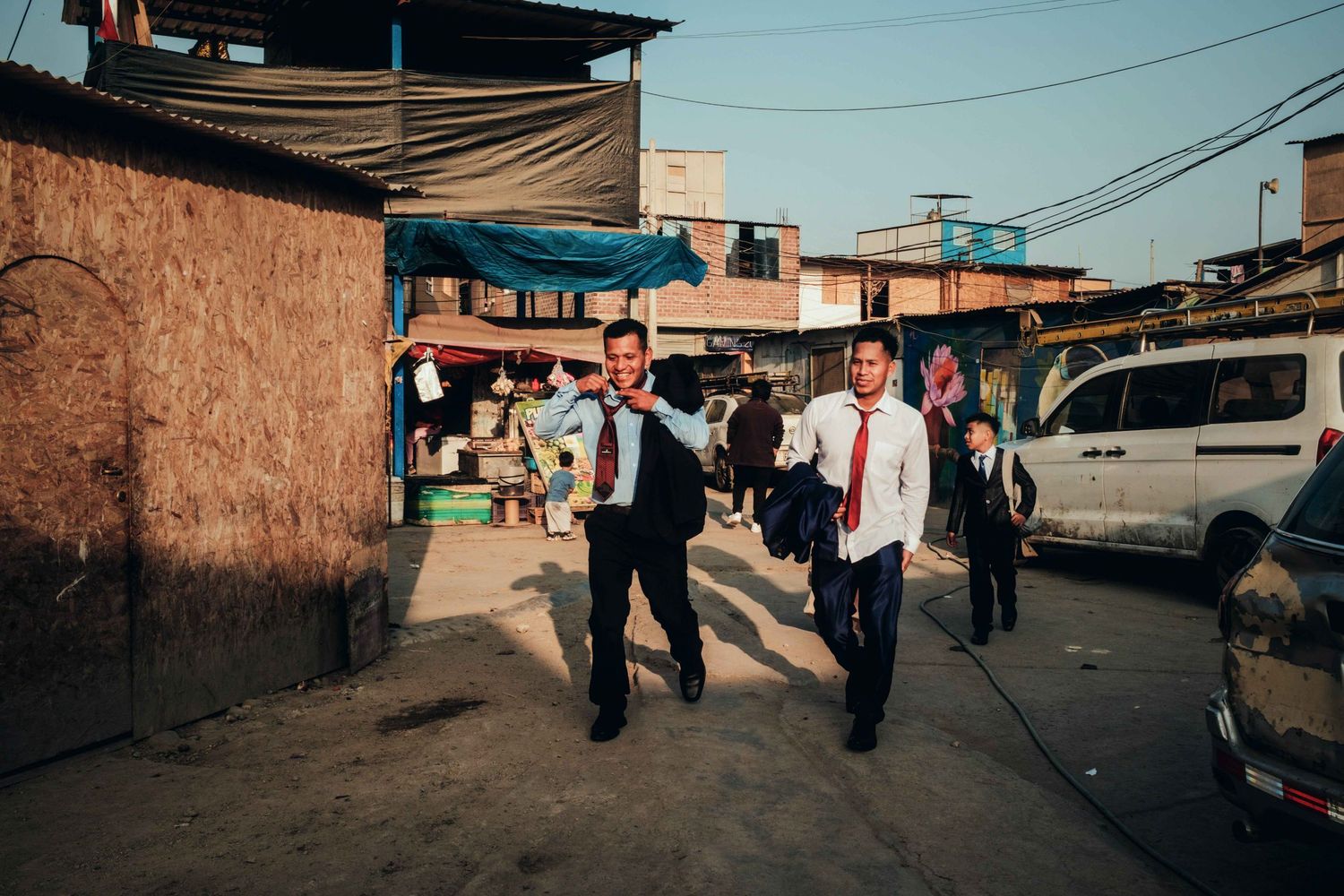
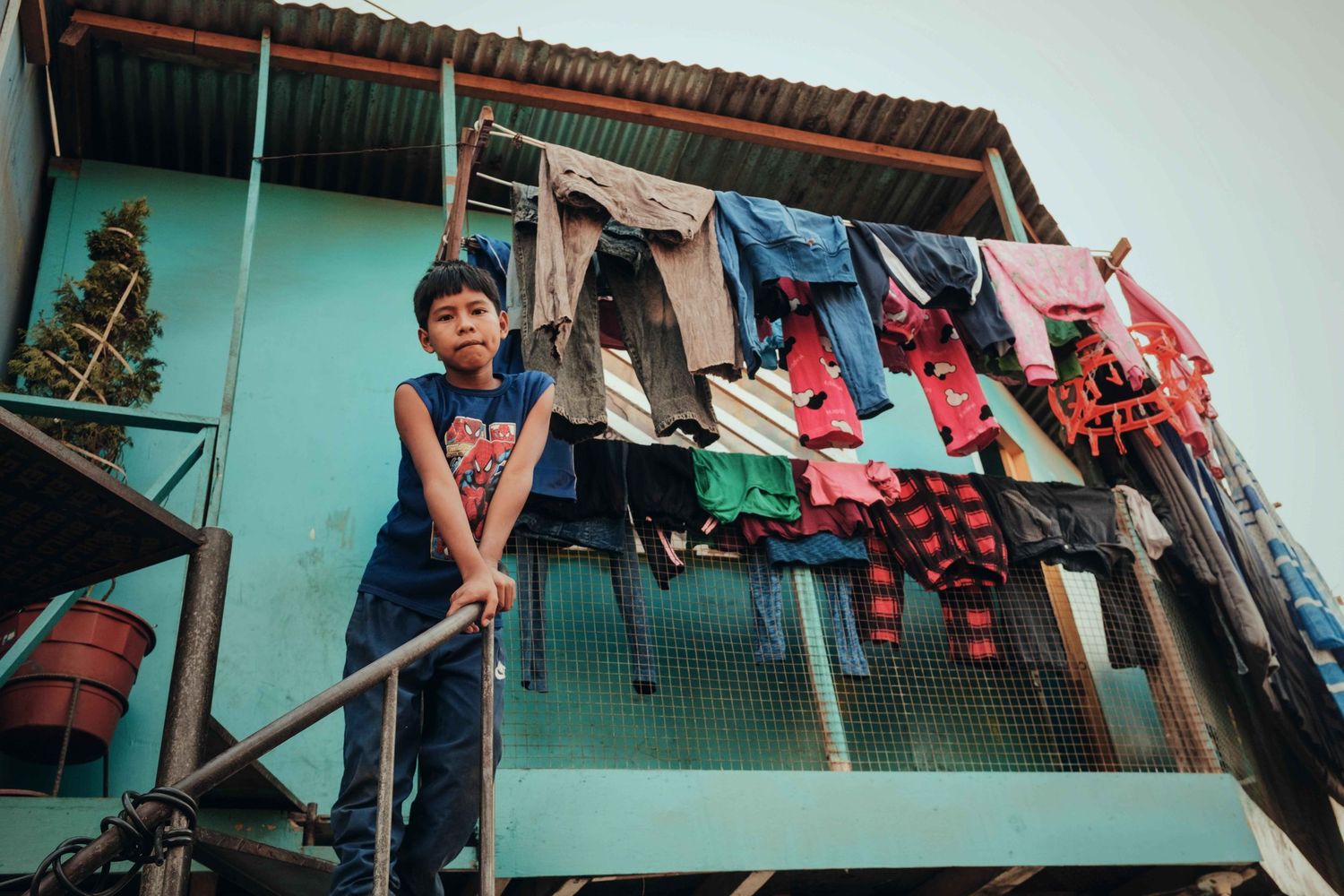
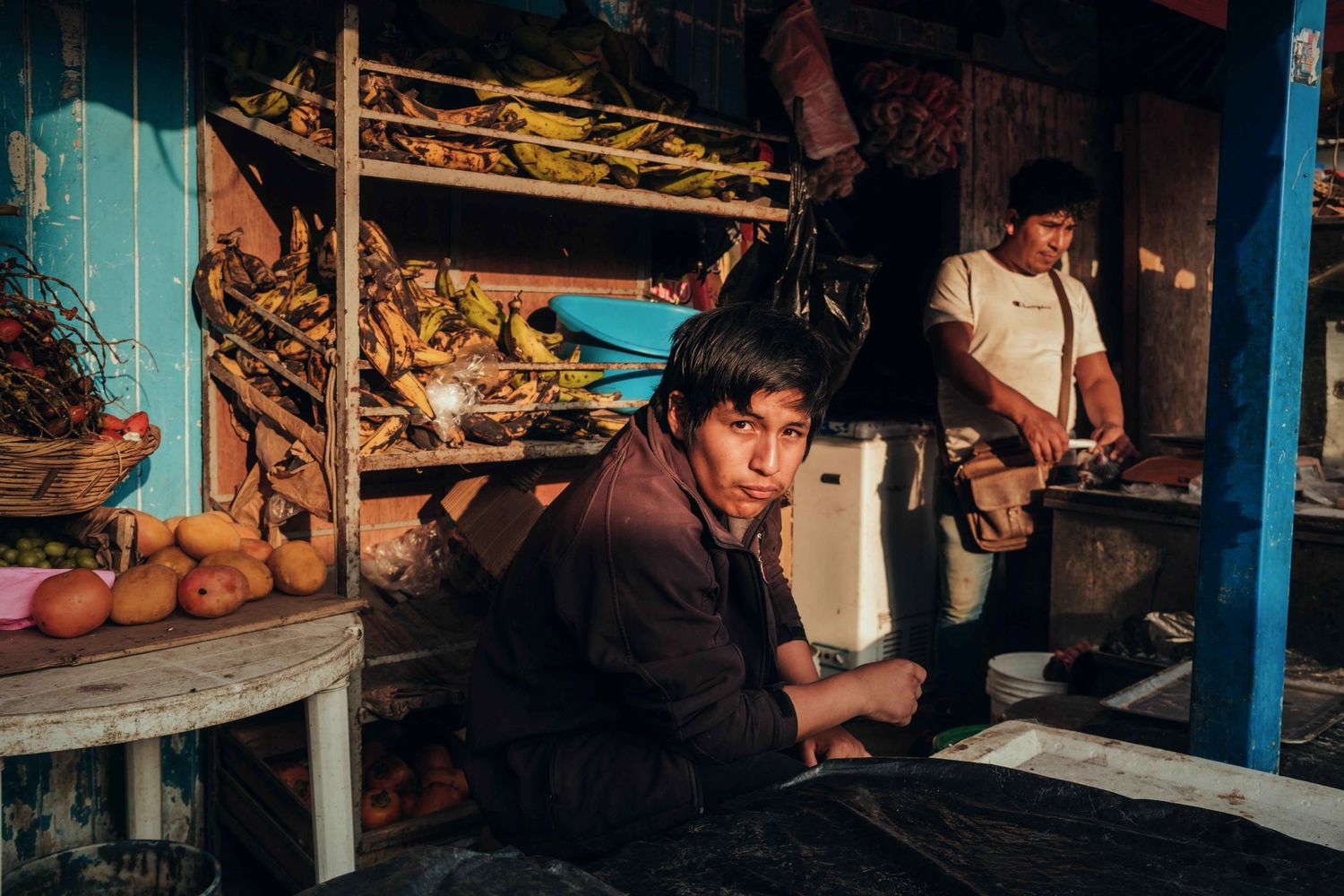
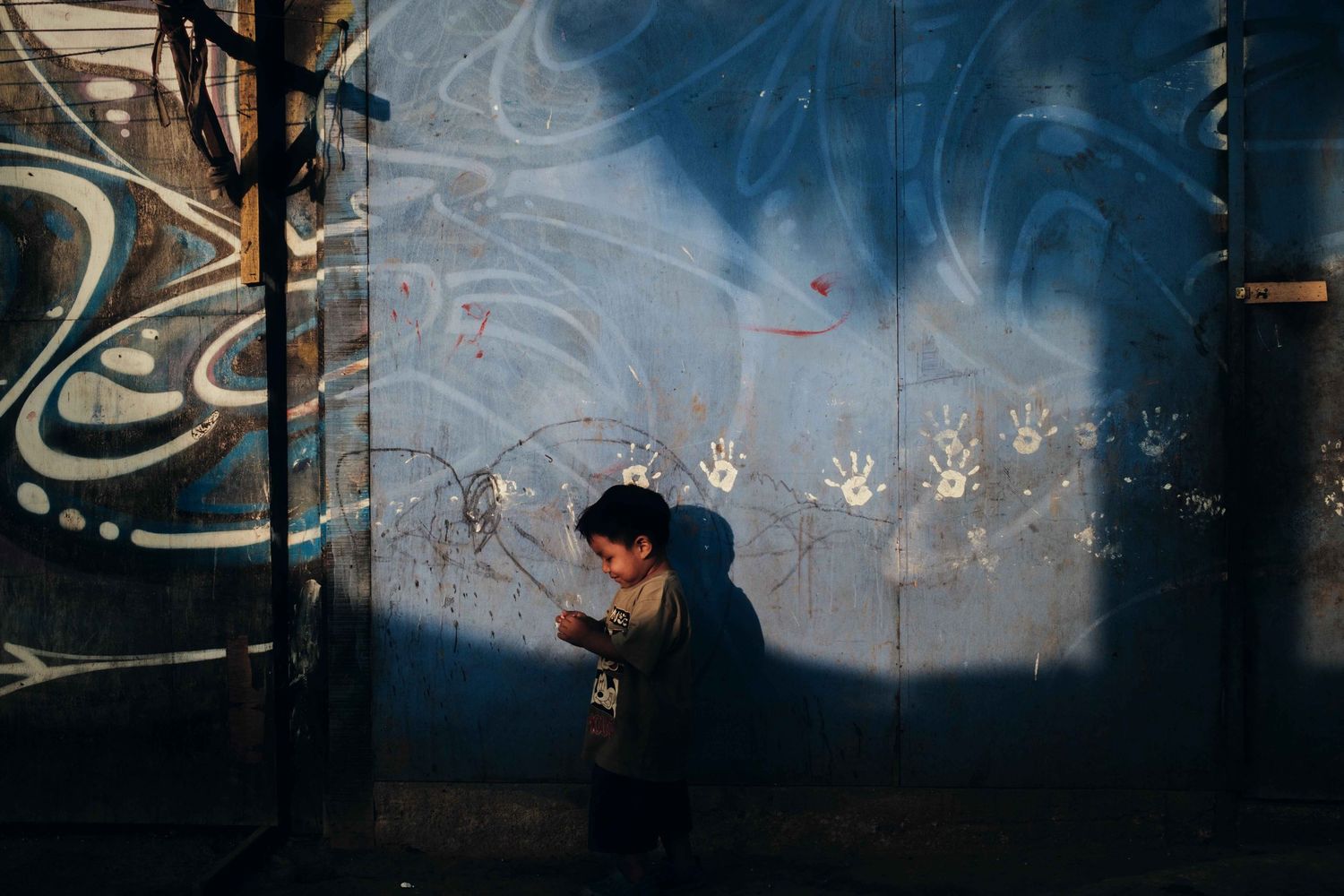
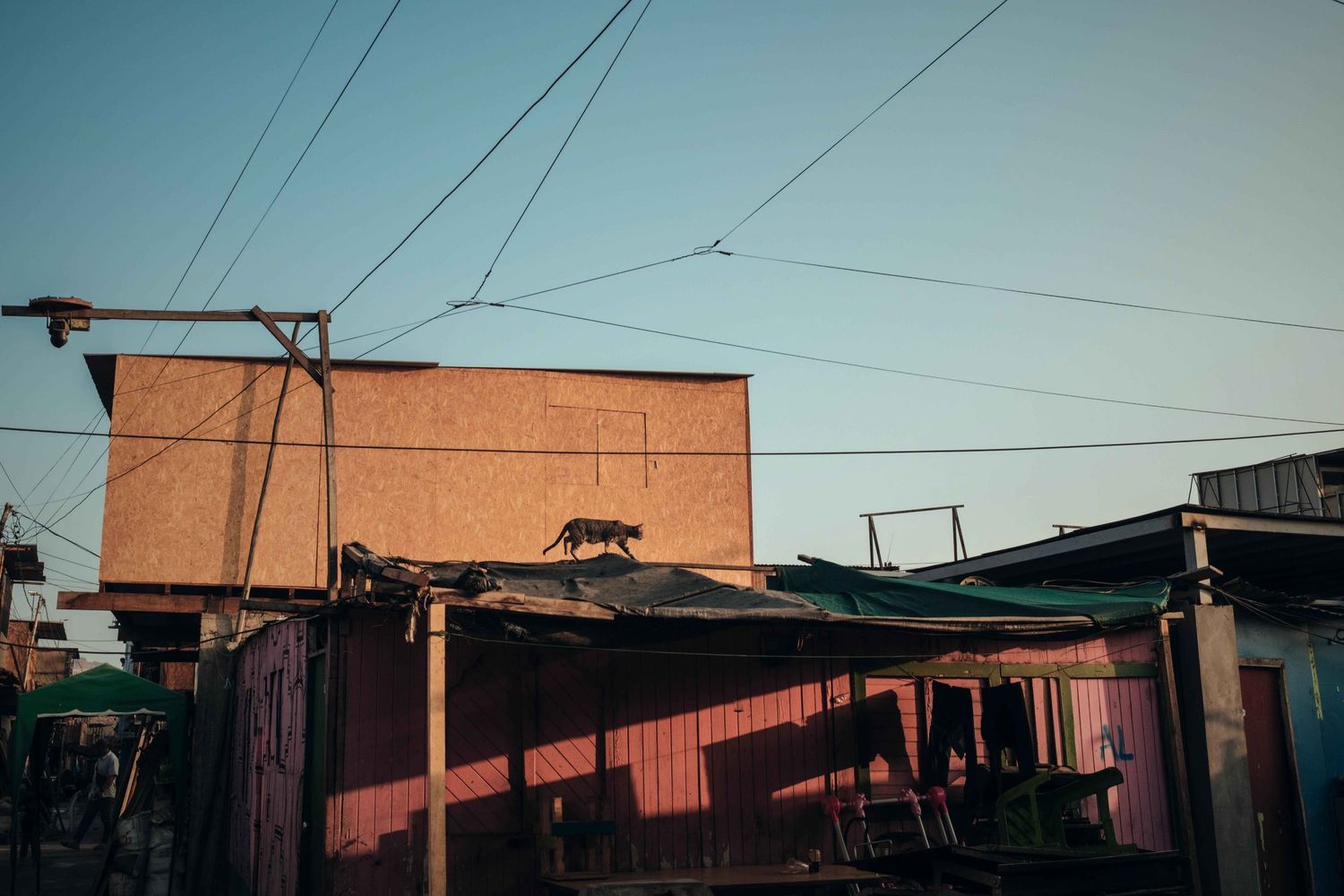
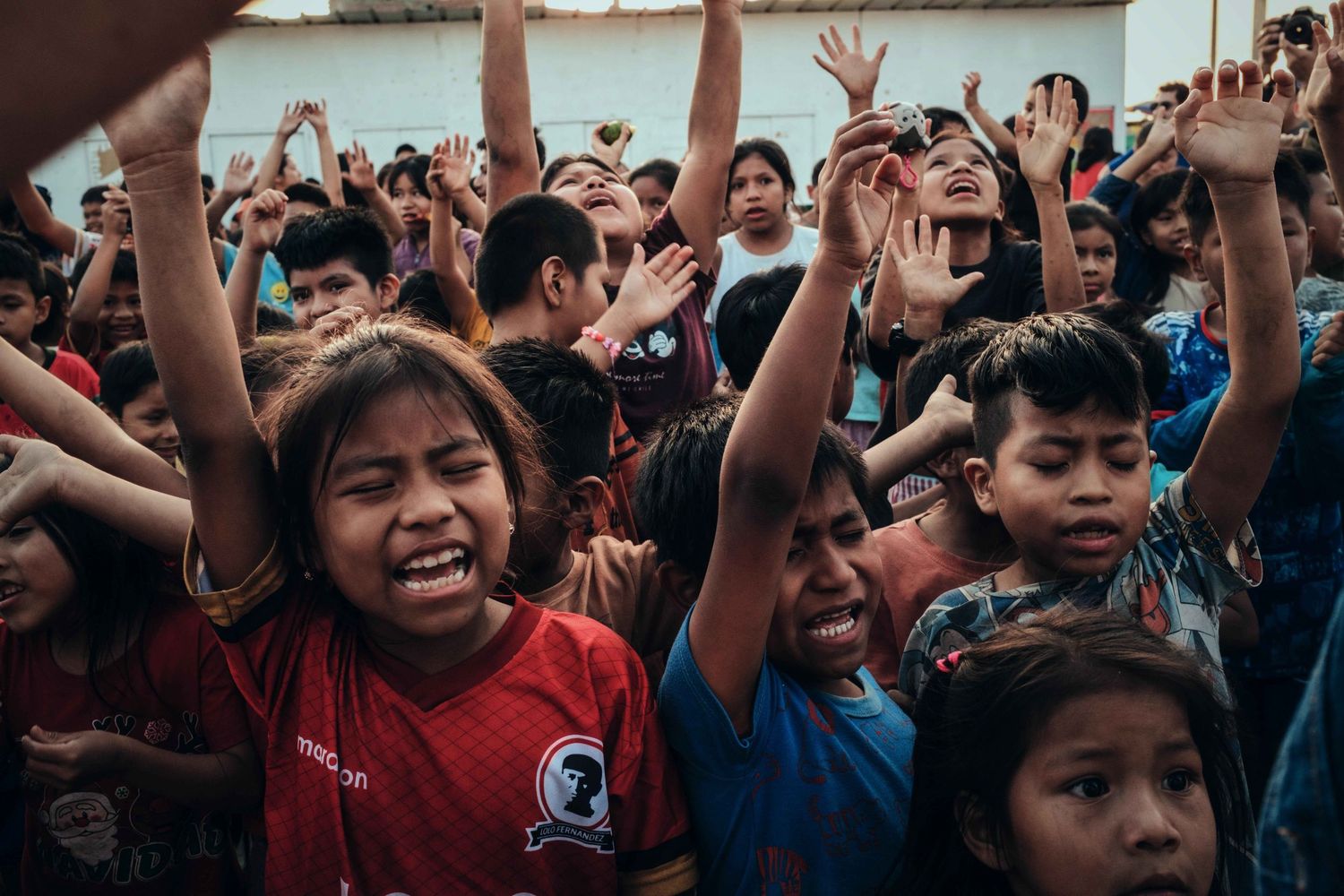
Cantagallo is a Shipibo-Konibo community: people from the Amazon who left the river and the forest to rebuild their lives on a landfill beside the Rimac river, in the middle of Lima, Peru. What stopped me wasn't the hardship, that's visible from a distance and needs no camera. It was what they had laid over it. On the corrugated-metal doors, the kené appears: the designs that once ran across their ceramics and their skin. On a dirt wall, a woman in a headdress watches the street as if guarding a forest that's no longer there. Children run past her, jump over balloons, carry their younger siblings, play among the cardboard.
All I did was frame what these people had already painted with their hands: a jungle drawn where there is no jungle. I keep coming back to that, to the idea that when a people is torn from its land, it doesn't carry the things, it carries the images. The forest can't be moved; it gets drawn again. That's what Cantagallo is to me: proof that a place can live on in how it's remembered by those who lost it, and that this memory, sooner or later, surfaces again on any wall.